Time Is Fleeting Meaning: Where the Phrase Comes From and What It Asks of Us
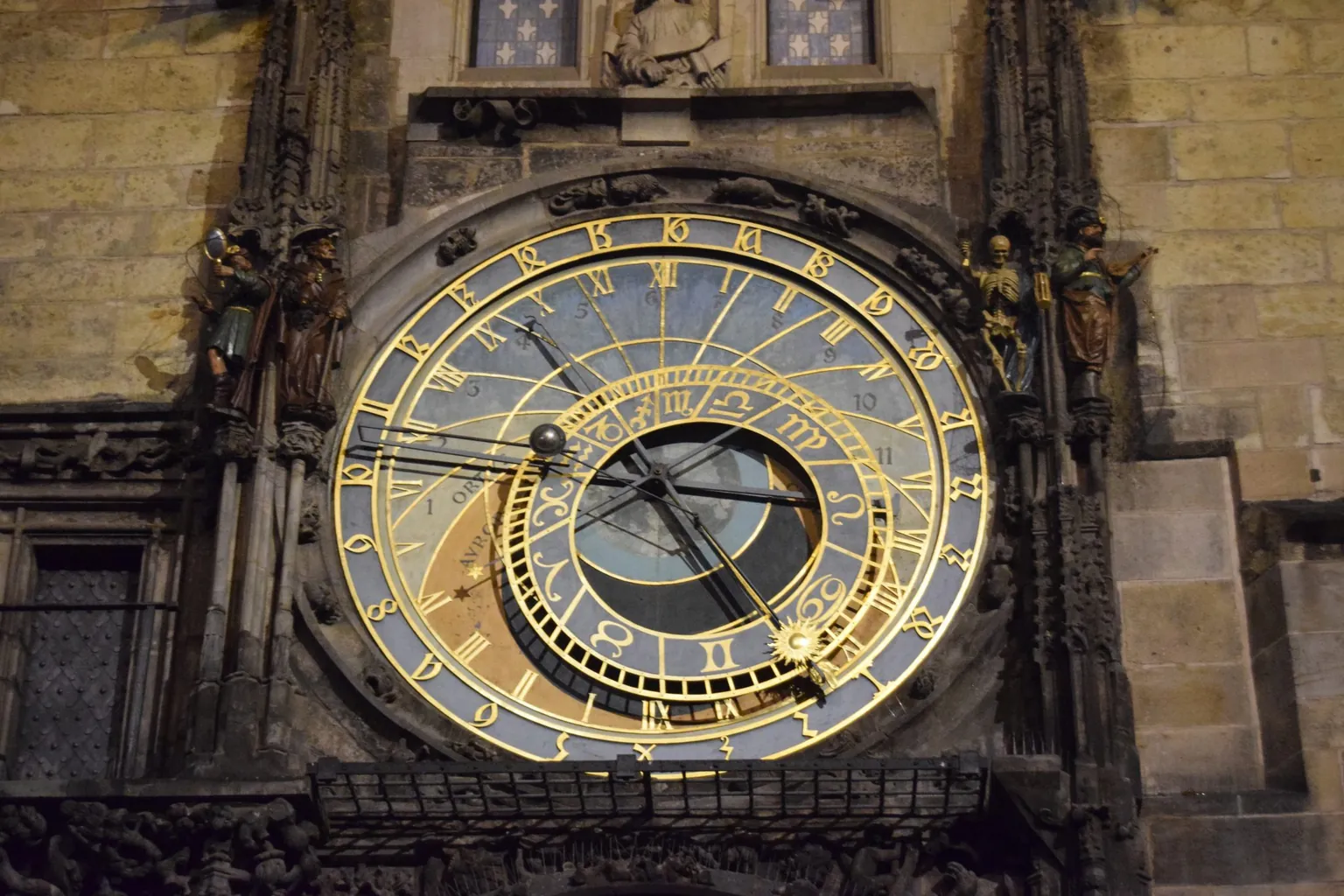
You hear it at birthdays. At graduations. At the end of a long summer that somehow felt like a single weekend.
“Time is fleeting.”
It sounds like a cliché until the day it doesn’t. Until you look at a photo from five years ago and can’t believe it’s been five years. Until a child you remember as a toddler is suddenly taller than you. That’s when the time is fleeting meaning stops being a phrase and starts being a feeling.
This is a companion to our piece on what “life is fleeting” really means. Here we zoom in on time itself: where the phrase came from, why time seems to speed up as we get older, and what this old idea is actually asking of us today.
Time Is Fleeting Meaning: The Short Answer
“Time is fleeting” means that time passes quickly and can’t be held, paused, or recovered. It’s a reminder that every hour is temporary, so how we use our time matters. The phrase isn’t meant to frighten. It’s meant to focus.
The word fleeting describes something brief and fast-moving. Merriam-Webster defines it simply as “passing swiftly.” It comes from the Old English flēotan, meaning to float or drift, the same root that gives us a “fleet” of ships and someone who is “fleet of foot.” Picture something gliding past on a current. You can watch it. You can’t make it stop.
So when someone says time is fleeting, they’re pointing at two truths at once:
- Time moves whether or not we notice it.
- Once a moment passes, it doesn’t come back.
Everything else, the poetry, the urgency, the gentle nudge to call your mother, grows out of those two facts.
Where the Phrase “Time Is Fleeting” Comes From
The idea is ancient. The exact wording is more recent.
Tempus fugit: time flies
Around 29 BC, the Roman poet Virgil wrote in his Georgics, “Sed fugit interea, fugit irreparabile tempus”: “But meanwhile it flies, time flies irretrievably.” Shortened to tempus fugit, the line ended up engraved on clocks, sundials, and gravestones for centuries. It’s the Latin grandparent of “time is fleeting.”
Ars longa, vita brevis
Even earlier, the Greek physician Hippocrates opened his Aphorisms with a line usually quoted in Latin as ars longa, vita brevis, “art is long, life is short.” He meant that mastering medicine takes longer than a lifetime allows. The Stoic philosopher Seneca later quoted it at the start of his essay On the Shortness of Life, and then pushed back: “It is not that we have a short time to live, but that we waste a lot of it.”
Longfellow’s “A Psalm of Life”
The English phrasing most people half-remember comes from Henry Wadsworth Longfellow’s 1838 poem “A Psalm of Life”:
Art is long, and Time is fleeting,
And our hearts, though stout and brave,
Still, like muffled drums, are beating
Funeral marches to the grave.
It reads as grim, but the poem is actually a call to action. A few stanzas later Longfellow urges, “Let us, then, be up and doing.” The fleeting nature of time is the reason to live fully, not the reason to despair.
The Rocky Horror twist
For a whole generation, though, “time is fleeting” means one thing: “The Time Warp” from The Rocky Horror Show (and the 1975 film). “It’s astounding, time is fleeting, madness takes its toll.” Played for laughs, sung at midnight screenings, it kept the phrase alive in pop culture long after Longfellow stopped being required reading.
From Roman poetry to a cult musical, the message survives because it never stops being true.
Why Time Feels Like It’s Speeding Up
A clock ticks at the same rate for a child and a grandparent. Yet almost everyone agrees that years feel shorter as we age. There are a few well-known explanations, and none of them require a stopwatch.
Each year is a smaller slice
When you’re five, one year is a fifth of your whole life. At fifty, it’s a fiftieth. Relative to everything you’ve lived, each new year is a thinner slice, so it can feel slighter as it passes.
Routine compresses memory
Childhood is crowded with firsts: first day of school, first friend, first time seeing the ocean. New experiences lay down rich, distinct memories. Adulthood often runs on routine: the same commute, the same desk, the same weeknight dinners. When days look alike, the mind files them together. Looking back, a whole season can collapse into a single blur.
That’s why a week-long trip somewhere new can feel “longer” in memory than three ordinary months at home. The writer Claudia Hammond calls this the holiday paradox: time flies while you’re having fun, yet the trip feels long when you remember it.
Attention is scattered
We rarely live a single moment at a time anymore. We eat while scrolling, listen while planning, rest while worrying. When attention is split, fewer moments get fully recorded, and time slips by unnoticed. We explore that more in what happens when you’re not present.
The good news hiding in these explanations: if routine and distraction make time feel faster, novelty and attention can make it feel fuller.

What “Time Is Fleeting” Is Really Asking of Us
A phrase that has lasted two thousand years usually carries an instruction. Here is how I read this one.
To notice
The first ask is simple: pay attention. Not to every second, which is exhausting, but to the moments that matter. The light on the kitchen table on a Sunday morning. The way a friend laughs. The quiet after the house finally goes to sleep. Everyday brilliance is always there. Fleeting time just means it won’t wait for us to look up.
To choose
If time is limited, every yes is also a no to something else. The time is fleeting meaning invites us to choose on purpose rather than by default. Seneca’s complaint wasn’t that life is short. It was that we hand our hours to things we don’t care about. Time and attention really are your most valuable commodity.
To stop postponing
“Someday” is the favorite word of people who assume time is endless. The trip, the apology, the creative project, the long phone call with an old friend: these are the things fleeting time quietly takes off the table if we wait too long.
To go easy on ourselves
Here’s the part people miss. Fleeting time is also a reason for grace. Bad days pass. Awkward seasons end. The worst week of your year will one day be a story you tell. Impermanence takes the good moments away, but it takes the hard ones too.
Time Is Fleeting vs. Life Is Fleeting
The two phrases are close cousins, but they lean in slightly different directions.
| Phrase | Focus | Typical use | What it nudges you to do |
| Time is fleeting | The speed of hours, days, and years | Deadlines, seasons, milestones, “where did the year go?” | Use time deliberately; stop wasting it |
| Life is fleeting | The limits of a whole lifetime | Loss, big decisions, turning points | Prioritize what matters most; live fully |
| Fleeting moment | A single passing experience | Beauty, joy, small details | Notice and savor it now |
| Tempus fugit | The classic, formal version | Clocks, mottos, inscriptions | Remember that time moves on |
If you want the bigger-picture version, including how the idea reshapes relationships and careers, read our deep dive on the life is fleeting meaning.
How to Use “Time Is Fleeting” in a Sentence
The phrase works in everyday speech as well as in writing. A few natural examples:
- “Time is fleeting. Let’s book the trip this year instead of talking about it again.”
- “The kids grew up so fast. Time really is fleeting.”
- “I know time is fleeting, but I don’t want to rush through this. Let’s enjoy it.”
- “In a business where time is fleeting, the best leaders protect their team’s focus.”
It can sound wistful, urgent, or gently encouraging depending on tone. Said kindly, it’s an invitation. Said impatiently, it can feel like pressure, so it’s worth noticing which version you’re using on yourself.
Practical Ways to Honor Fleeting Time
You can’t slow the clock. You can change how your days are lived, and how they’re remembered.
Add small firsts
Since novelty makes memories, add a few deliberate firsts to ordinary weeks: a new route to work, a recipe you’ve never cooked, a park you’ve never walked. They don’t need to be big. They need to be different.
Do one thing at a time
Pick one daily activity, coffee, a walk, dinner, and give it your full attention for a week. No phone. No multitasking. You’ll be surprised how much longer and richer that part of your day starts to feel.
Slow down on purpose
Some cultures build unhurried living right into the day. We wrote about the joy of living on island time even when you’re nowhere near a beach. Slowing down isn’t laziness; it’s how moments get long enough to keep.
Audit where the hours go
For three days, jot down roughly how you spend your time. Not to judge it, just to see it. Most people find one or two “leaks” they didn’t realize were there. Plugging even one gives back hours every week. If your days feel crowded, our guide to managing your personal bandwidth can help.
Mark the milestones
Birthdays, anniversaries, the first warm day of spring: rituals put bookmarks in time. Without them, years run together. With them, you can look back and actually find your life.
Write it down
A one-line journal, one sentence about each day, is one of the simplest ways to fight the blur. Months later, those lines bring entire weeks back to life.
Time Is Fleeting Quotes Worth Keeping
A few lines that capture the idea well, all correctly attributed:
- “Art is long, and Time is fleeting.” — Henry Wadsworth Longfellow, “A Psalm of Life”
- “It is not that we have a short time to live, but that we waste a lot of it.” — Seneca, On the Shortness of Life
- “How we spend our days is, of course, how we spend our lives.” — Annie Dillard, The Writing Life
- “Lost time is never found again.” — Benjamin Franklin, Poor Richard’s Almanack
- “The two most powerful warriors are patience and time.” — Leo Tolstoy, War and Peace
Pick one. Put it somewhere you’ll see it. Let it do its quiet work.
Is “Time Is Fleeting” a Negative Phrase?
Not on its own. The words are neutral; the tone comes from how we hold them.
Some people hear the time is fleeting meaning as a countdown, a ticking clock that turns every free afternoon into a test they might fail. That version breeds anxiety. It whispers that you’re behind, that you should be doing more, that rest is wasted time.
Others hear it as permission. Permission to say no to things that drain them. Permission to linger over a meal. Permission to stop waiting for the “right time” to start something they care about.
The difference is whether the phrase pushes you toward more or toward what matters. Fleeting time doesn’t ask you to fill every hour. It asks you to stop giving the best hours away by accident. If the idea ever leaves you feeling frantic, that’s a sign it has been bent into pressure. The original intention, from Virgil to Longfellow, was always closer to wisdom.
What Time Is Fleeting Means at Different Stages of Life
The phrase lands differently depending on where you are.
- In your teens and twenties, time can feel endless, and that’s part of the gift of those formative years. The time is fleeting meaning here is mostly about not drifting: building habits and relationships while the foundation is still being poured.
- In your thirties and forties, it often shows up as a squeeze. Careers, kids, aging parents. Time feels scarce because it’s spread across so many people. The lesson becomes choosing what to protect.
- In midlife and beyond, the phrase gets personal. Friends retire, children leave home, and the years start to visibly stack up. Many people find this stage surprisingly freeing: with less time to waste, they waste less of it.
At every stage, the core of the time is fleeting meaning stays the same. What changes is which hours feel most precious.
The Gift Inside the Warning
It’s easy to hear “time is fleeting” as a warning bell. But every warning carries a gift. If time lasted forever, nothing would be precious. A sunset matters because it ends. A conversation matters because it can’t be repeated exactly the same way.
The time is fleeting meaning, at its heart, is an argument for presence. Not panic. Not rushing to do everything. Just a little more attention, a little more intention, and a little less waiting for someday.
The hours will keep drifting by. The question is whether we’re watching from the shore or swimming with them.
FAQs
What does “time is fleeting” mean?
It means time passes quickly and can’t be paused or recovered, so how we use it matters. It’s a reminder to live intentionally, not a reason to panic.
Where does the phrase “time is fleeting” come from?
The idea goes back to Virgil’s “tempus fugit” (time flies). The English wording is best known from Longfellow’s 1838 poem “A Psalm of Life”: “Art is long, and Time is fleeting.”
Is “time is fleeting” from The Rocky Horror Picture Show?
The song “The Time Warp” includes the line “time is fleeting, madness takes its toll,” which made the phrase famous in pop culture, but the expression is much older.
Why does time feel faster as we get older?
Each year is a smaller share of our total life, and adult routines create fewer new memories. When days look alike, the mind compresses them, so time seems to fly.
What is the difference between “time is fleeting” and “life is fleeting”?
“Time is fleeting” focuses on how fast hours and years pass; “life is fleeting” points to the limits of a whole lifetime and what deserves priority within it.
How can I make time feel slower?
Add small new experiences to your week, give one daily activity your full attention, mark milestones with rituals, and keep a one-line journal so days don’t blur together.
Is “time is fleeting” a negative saying?
Not inherently. It can feel like pressure if used to demand constant productivity, but its original intent is closer to encouragement: focus on what matters before the moment passes.