We talk about money like it’s the ultimate prize. We chase promotions. And we hoard credentials. We track numbers on dashboards. But here’s the uncomfortable truth: the most valuable commodity in your life may not be what you think it is.
A valuable commodity isn’t just something expensive. It’s something scarce. Useful. In demand. Protected. Tradable. Whether we’re talking about oil, gold, data, or your personal reputation, the same principles apply. And right now, the definition of a valuable commodity is evolving faster than most people realize.
Let’s unpack it properly.
What Is a Valuable Commodity?
In economic terms, a commodity is a basic good used in commerce that is interchangeable with other goods of the same type. Wheat is wheat. Gold is gold. A barrel of oil is standardized and priced on global markets.
But that’s only half the story.
In real life, a valuable commodity can also be intangible. It can’t always be stored in a vault. Sometimes it exists inside you. Sometimes it’s how others perceive you.
Value is not just physical. It’s contextual. And often psychological.
Traditional Valuable Commodities: The Foundations of Wealth
Historically, a valuable commodity was tangible. Measurable. Extractable.
Classic Examples:
- Gold
- Oil
- Agricultural crops (wheat, corn, coffee)
- Rare earth minerals
- Natural gas
Why were these considered a valuable commodity?
Because they had:
| Factor | Why It Matters |
| Scarcity | Limited supply increases price |
| Utility | Essential for production or consumption |
| Demand | Global need sustains markets |
| Transportability | Can be traded across regions |
| Standardization | Quality consistency builds trust |
Take oil. It fuels transportation, manufacturing, logistics.
But here’s the shift.
The world moved.
From Physical to Intangible: The Evolution of Value
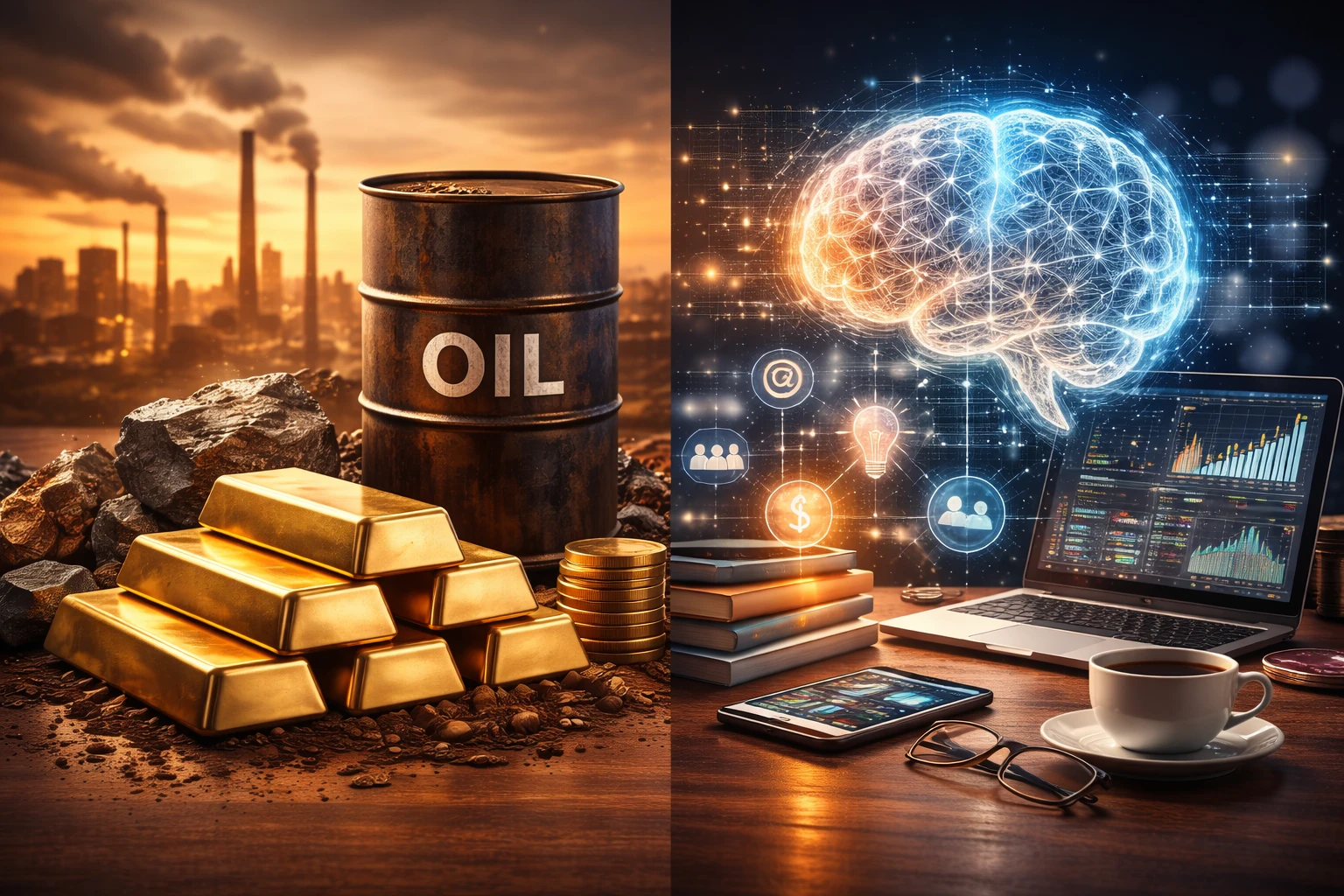
The industrial era prized land, steel, and oil. The information age prizes data, ideas, and influence.
And today? We’re living in the human capital era.
The most powerful valuable commodity may no longer sit underground. It may sit in your calendar. Or in your mind.
Let’s break down the new hierarchy.
Time: The Most Underrated Valuable Commodity
Time is the one commodity you cannot mine, manufacture, or multiply. It is finite. Non-renewable. Irreplaceable.
And yet, most people treat it casually.
Think about this: if time were traded like gold, how would you protect it?
Time is a valuable commodity because:
- It cannot be stored for later use.
- It compounds when invested wisely.
- It evaporates when mismanaged.
- It determines opportunity cost.
Opportunity cost simply means choosing one thing means giving up another. If you spend three hours scrolling, that’s three hours not building a skill, strengthening a relationship, or improving your health.
Here’s how to guard your time like the valuable commodity it is:
Practical Time Protection Strategies
- Block calendar “focus zones” daily.
- Audit weekly time leaks.
- Say no without apology.
- Batch low-value tasks.
- Eliminate reactive communication cycles.
I started treating my calendar like inventory. If a meeting didn’t justify its cost in attention and outcome, it didn’t get booked. That small shift alone changed productivity dramatically.
Time is not just money. It’s leverage.
Attention: The Commodity Everyone Wants From You
We now live in what economists call the attention economy.
Your focus is being auctioned every second. Social platforms. News feeds. Notifications. All competing.
Attention is a valuable commodity because:
- It drives advertising revenue.
- It fuels influence.
- It shapes decision-making.
- It determines purchasing behavior.
Companies don’t sell products first. They capture attention. Then they convert it.
If attention is currency, then distraction is inflation.
How to Protect Your Attention:
- Disable non-essential notifications.
- Use single-tasking blocks.
- Limit algorithmic content consumption.
- Create before you consume.
Attention compounds too. If you can focus deeply for 90 uninterrupted minutes, your output outpaces fragmented effort by miles.
And here’s the opportunity: if you can command attention ethically, you can create enormous value.
Which leads to the next commodity.
Knowledge and Skills: The Personal Valuable Commodity
Your skill set is tradable. Portable. Expandable.
Unlike oil or gold, your expertise grows with use.
In a competitive market, a valuable commodity often means rare, high-demand skill combinations.
High-Value Skill Categories:
- Technical (data analysis, software development)
- Strategic (decision-making, systems thinking)
- Creative (design, writing, branding)
- Interpersonal (negotiation, emotional intelligence)
But here’s the twist: it’s not just specialization anymore. It’s skill stacking.
A marketer who understands analytics.
A programmer who communicates clearly.
A consultant who understands psychology.
That overlap creates scarcity. Scarcity creates a valuable commodity.
Skill Investment Framework
| Action | Outcome |
| Learn one core skill | Market entry |
| Stack complementary skills | Competitive advantage |
| Teach others | Authority positioning |
| Build portfolio | Proof of value |
| Charge based on outcome | Income growth |
Treat your learning budget like asset acquisition. Not an expense. An investment.
Trust: The Invisible Valuable Commodity
You can’t see trust. But you can feel when it’s missing.
Trust accelerates transactions. It reduces friction. It lowers negotiation time. And it increases loyalty.
In business, trust is a powerful valuable commodity because:
- It reduces acquisition cost.
- It increases lifetime value.
- It strengthens brand resilience.
- It stabilizes partnerships.
Without trust, everything costs more.
To build trust:
- Keep promises.
- Communicate transparently.
- Admit mistakes quickly.
- Deliver consistently.
Trust compounds quietly. Break it once, and the market adjusts immediately.
Scarcity and Perception: Why Value Is Psychological

Value isn’t always rational.
Limited editions. Exclusive memberships. Scarce access. These trigger urgency.
The psychology behind a valuable commodity often rests on perceived scarcity. Even if supply exists, if access feels restricted, value rises.
But be careful.
Artificial scarcity without substance erodes trust long term.
True value sustains itself because utility backs it.
Increasing Your Personal Market Value
If you want to become a valuable commodity in your field, you must operate intentionally.
Here’s a practical framework.
1. Build Rare Capabilities
Identify skill gaps in your industry. Fill them before others notice.
2. Develop Emotional Intelligence
Decision-making improves. Leadership strengthens. Relationships deepen.
3. Protect Your Reputation
Digital footprints last. Act accordingly.
4. Expand Networks Strategically
Access is leverage.
5. Invest in Long-Term Assets
Health. Knowledge. Relationships. Systems.
Here’s a breakdown:
| Commodity Type | How to Increase It |
| Time | Delegate low-value tasks |
| Attention | Reduce digital clutter |
| Skill | Continuous education |
| Trust | Consistent delivery |
| Reputation | Ethical decisions |
| Network | Intentional outreach |
You are building a portfolio. Not just earning a paycheck.
Commodities of the Future
What will define a valuable commodity in the next decade?
Artificial Intelligence Literacy
Understanding AI systems won’t be optional. It will be baseline.
Clean Energy Expertise
Energy transition is accelerating. Knowledge here will command premium value.
Mental Resilience
Stress tolerance is becoming rare. Emotional stability is powerful.
Authenticity
In a filtered world, genuine presence stands out.
Community Building
Isolation is increasing. People crave belonging.
The next valuable commodity may not be what you own. It may be what you embody.
Common Mistakes About Valuable Commodities
Let’s correct some misconceptions.
Mistake 1: Confusing Price with Value
High cost does not guarantee high utility.
And mistake 2: Chasing Trends Instead of Fundamentals
True value sustains beyond hype cycles.
Mistake 3: Ignoring Intangibles
Time, trust, and reputation outperform short-term gains.
And mistake 4: Short-Term Thinking
Quick wins often undermine long-term positioning.
Wealth is often quiet. Value compounds slowly.
Rethinking What You Truly Value
Pause for a moment.
What is your most valuable commodity right now?
Is it your network?
Your health?
Your attention span?
And your expertise?
Your credibility?
If everything else disappeared tomorrow, what would remain tradable?
That answer matters.
Because the marketplace doesn’t just reward resources. It rewards rarity. Utility. Reliability.
And here’s the part most people overlook: you can manufacture personal value.
You can refine your skill set.
And you can guard your time.
You can protect your attention.
You can build trust deliberately.
The most powerful valuable commodity is not always stored in vaults or traded on exchanges. Sometimes it’s built quietly, day by day, decision by decision.
Value isn’t loud. It’s consistent.
It shows up early. It delivers. And it compounds.
And in a world overflowing with noise, scarcity isn’t always physical. Sometimes it’s discipline. And sometimes it’s integrity. And sometimes it’s focus.
Treat your time like oil.
Your attention like gold.
Your trust like currency.
And your knowledge like infrastructure.
Because in the end, the rarest resource in the room isn’t always the richest person.
It’s the person who understands what the true valuable commodity really is—and protects it fiercely.
FAQs
A valuable commodity is any resource—tangible or intangible—that is scarce, in demand, and capable of being exchanged for value.
No, while traditional commodities are physical goods, modern valuable commodities also include time, attention, skills, and trust.
Time is limited and non-renewable, making it one of the most scarce and powerful assets you possess.
Attention drives influence and purchasing decisions, which is why businesses compete aggressively to capture it.
Yes, specialized and in-demand skills can be monetized, making them highly tradable personal assets.
Trust reduces friction, speeds up transactions, and increases long-term loyalty.
Develop rare skills, protect your reputation, manage your time wisely, and consistently deliver results.
No, price reflects cost, while value reflects utility, scarcity, and demand.
The modern economy rewards knowledge, adaptability, and influence more than raw materials alone.
AI literacy, emotional resilience, and authentic leadership are likely to become increasingly valuable commodities.