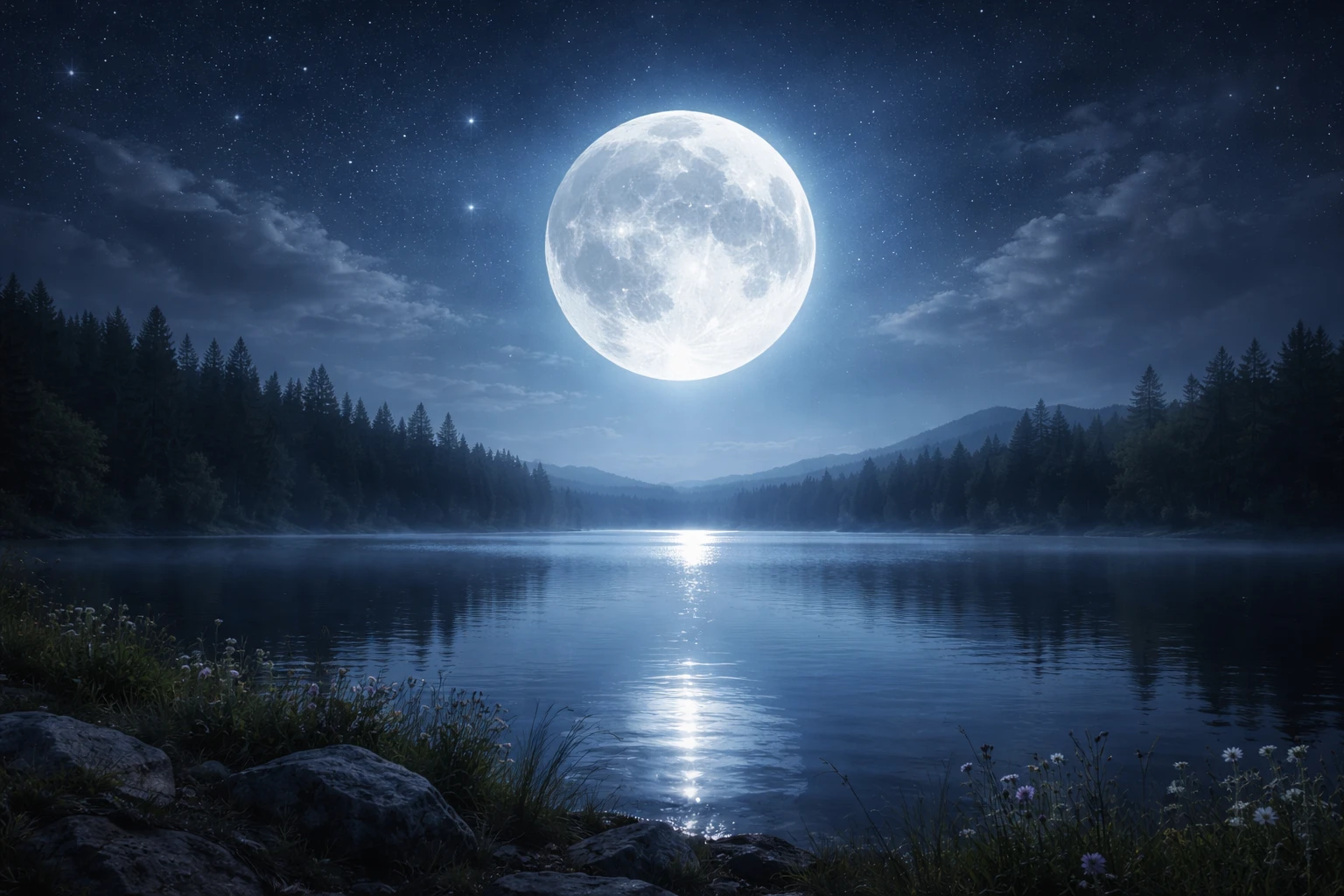
The idea of a moon message has followed humanity for thousands of years. We look up at that pale glow in the night sky and feel something shift. Not because it speaks in words. But because it reflects something back at us. A moon message isn’t about superstition. It’s about interpretation. It’s about timing. It’s about reflection.
And if you approach it thoughtfully, it becomes less about prediction and more about self-awareness. Let’s unpack what a moon message really means historically, psychologically, spiritually, and practically and how you can use it in grounded, intelligent ways.
What Is a Moon Message?
At its core, a moon message is symbolic meaning drawn from the moon’s phase, position, or timing. It’s the interpretation of lunar cycles as mirrors of human cycles.
Simple.
But powerful.
The moon doesn’t change randomly. It moves through consistent phases new, waxing, full, waning each representing progression. Growth. Illumination. Release.
Humans crave rhythm. We function better when we understand cycles. The moon offers one of the most visible, dependable cycles in existence. That’s why the concept of a moon message feels so intuitive.
It’s not mystical chaos. It’s pattern recognition.
The Historical Roots of the Moon Message
Long before electric light, the moon ruled the night. Civilizations structured agriculture, navigation, and ritual around it. Ancient Mesopotamians tracked lunar movements carefully. Egyptian cosmology tied lunar phases to rebirth cycles. Indigenous cultures relied on lunar calendars for planting and harvesting. The moon was not decoration. It was instruction. Even the word “month” comes from “moon.” That’s not coincidence.
Across cultures, a moon message was often interpreted as:
- A signal for planting or harvesting
- A marker for ceremony
- A guide for travel
- A reflection of emotional or spiritual tides
The moon became a messenger because it was reliable.
And reliability builds meaning.
The Science Behind the Moon’s Influence

Before we move deeper into symbolism, it helps to ground this conversation in astronomy.
The Moon’s gravitational pull affects Earth’s tides in measurable ways. NASA explains how the gravitational interaction between Earth and the Moon creates predictable tidal cycles, which are strongest during full and new moons.
That’s not myth. That’s physics.
Humans are not oceans. But we are biological organisms influenced by light cycles and circadian rhythms. The U.S. National Institutes of Health has published research on how light exposure influences sleep-wake patterns and hormonal regulation.
Does that mean the moon controls behavior? No.
But it does mean we are sensitive to environmental rhythms. And rhythms matter.
The Symbolism Behind a Moon Message
A moon message often centers on three core themes: reflection, transformation, and illumination.
1. Reflection
The moon does not create light. It reflects it. That metaphor alone is profound.
A moon message invites you to reflect. Not react. Not rush. Reflect.
What feels illuminated in your life right now?
What feels shadowed?
It’s a call to observe.
2. Transformation
The moon never looks the same twice. It grows. It peaks. It fades.
In many ways, this resembles what philosophers might call metanoia a profound transformation of mind or perspective. The term itself carries layered meaning and is worth exploring further.
The point isn’t theology. It’s transformation.
If you feel stuck, that’s temporary.
If you feel on top of the world, that’s temporary too.
A moon message often carries one core truth: you are in a phase, not a permanent state.
3. Light in Darkness
The moon shines brightest when the sky is darkest.
There’s a lesson there. And it’s not abstract. When life feels uncertain, clarity rarely arrives at noon. It arrives in stillness. At night. When distractions fade. That’s when reflection sharpens.
Understanding Moon Phases and Their Messages
Each phase carries a different kind of moon message. If you want to interpret lunar cycles intelligently, start here.
| Moon Phase | Symbolic Meaning | Practical Application |
| New Moon | Beginnings | Set intentions, plan quietly |
| Waxing Crescent | Growth | Take small steps forward |
| First Quarter | Action | Make decisions, push through resistance |
| Full Moon | Illumination | Evaluate progress, release tension |
| Waning Moon | Closure | Let go, rest, review |
Let’s go deeper.
New Moon Message: Quiet Beginnings
The sky is dark. Almost empty. This phase carries a moon message of initiation. But not loud action. Subtle intention.
Here’s how to work with it:
- Write 3 focused goals for the next 30 days
- Clarify one habit to build
- Identify one behavior to release
Keep it simple. Overcomplication kills momentum.
Waxing Crescent Message: Momentum
Now the sliver of light appears. This is where ideas move from paper to action. The moon message here is: start imperfectly.
Send the proposal.
Book the appointment.
Draft the outline.
Growth requires motion.
First Quarter Moon Message: Resistance
Half-lit. Half-shadowed. This phase often coincides with friction. Obstacles surface. Doubts appear.
That’s not failure. It’s alignment testing.
If something feels hard right now, ask:
- Is this resistance growth-related?
- Or is this misalignment?
A moon message during this phase challenges you to decide.
Full Moon Message: Illumination
Everything is visible.
Emotions intensify. Clarity sharpens. Results show themselves.
This is not the time to start. It’s the time to assess.
Ask:
- What worked?
- What didn’t?
- What am I holding onto unnecessarily?
Release is part of completion.
You don’t carry everything forward.
Waning Moon Message: Letting Go
Energy dips. Introspection deepens. This is your reset window. Reduce commitments. Close loops. Clear mental clutter. The moon message here is not dramatic. It’s restorative.
Rest is productive.
Why We Seek a Moon Message
Humans are meaning-makers.
We see patterns everywhere. In clouds. In numbers. In timing.
Psychologically, a moon message works because it provides structure. It anchors reflection to a visible cycle. And structure reduces anxiety. When life feels chaotic, a recurring pattern like the lunar cycle provides reassurance. It’s not about believing the moon controls you. It’s about using a predictable rhythm to pause and recalibrate.
How to Interpret Your Own Moon Message
You don’t need elaborate ceremonies. You need awareness.
Step 1: Track the Phase
Use a lunar calendar. It takes 30 seconds.
Awareness builds pattern recognition.
Step 2: Track Your Emotional State
For two months, jot down:
- Energy level
- Mood
- Major decisions
- Breakthroughs or setbacks
Patterns often emerge.
You may notice heightened productivity during waxing phases. Or introspection during waning phases.
That’s your personalized moon message.
Step 3: Ask Direct Questions
During each phase, reflect:
- What is emerging?
- What is peaking?
- What is fading?
This creates alignment between intention and timing.
Moon Message in Modern Culture

Scroll social media during a full moon. You’ll see heightened commentary. Emotional posts. Dramatic captions.
Why?
Because collective awareness amplifies perception. If millions expect intensity, intensity becomes socially reinforced.
The modern moon message often blends:
- Self-care rituals
- Intention setting
- Emotional validation
It’s not inherently harmful. It just needs grounding.
The Moon as a Mirror, Not a Fortune Teller
The moon doesn’t whisper instructions. It doesn’t promise outcomes. But it does provide rhythm. And rhythm is stabilizing.
A moon message becomes meaningful when you:
- Observe patterns
- Align actions with reflection
- Stay grounded in personal responsibility
I’ve found that working with lunar cycles creates intentional pauses. Those pauses sharpen clarity. And clarity changes everything. The sky isn’t controlling you. But it can remind you to look inward. That’s the real moon message.
Not magic.
Awareness.
FAQs
A moon message is symbolic meaning drawn from the moon’s phases to guide reflection, intention, and personal growth.
It’s primarily symbolic and reflective, though lunar cycles and light exposure are scientifically measurable.
Some people report heightened emotions, but research shows only subtle changes in sleep and behavior patterns.
Track the moon phases and reflect on your thoughts, energy, and decisions during each stage.
It typically symbolizes fresh beginnings, intention-setting, and quiet planning.
It often represents clarity, completion, emotional awareness, and release.
No, you can use lunar phases simply as a structured reflection tool without astrology.
Once per lunar phase is enough, creating a simple monthly rhythm for planning and review.
No, it’s a reflective framework, not a prediction system.
Because they encourage introspection, and personal insight often feels deeply meaningful.