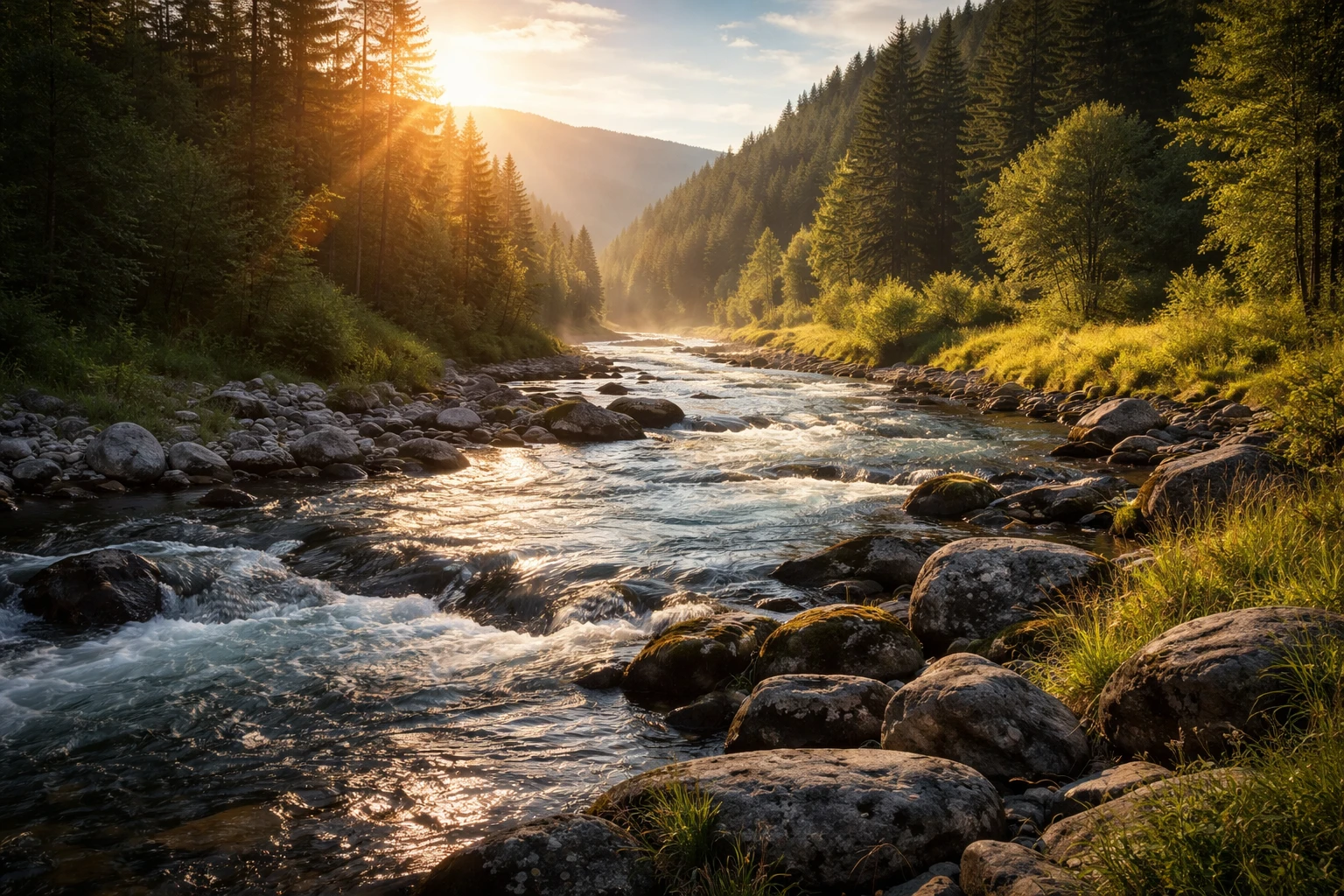
Life is like a river. It moves whether we approve or not. It flows whether we feel ready or not. And it carries us forward, sometimes gently, sometimes with force.
Stand at the edge of a river and watch it for a while. You’ll see movement, reflection, turbulence, depth, and direction all at once. That’s us. That’s our careers, our relationships, our ambitions, our regrets. Life is like a river because it never stands still and neither do we. Let’s walk this metaphor all the way through. Not as poetry. As practical insight.
The Constant Flow: Change Is Inevitable
A river doesn’t pause to debate its next move. It flows.
The problem is, we often don’t.
We cling to titles, routines, relationships, and identities that once fit us but no longer do. We resist promotions because they scare us. We resist endings because they hurt. We resist growth because it disrupts comfort.
But life is like a river. And rivers that stop flowing become stagnant.
The scientific study of rivers is known as potamology (yes, that’s a real word), which you can explore further on Wikipedia.
Why mention that? Because even something as natural and poetic as a river has structure, systems, and patterns. Flow is not chaos. It follows principles.
So does your life.
If you’re navigating change right now, ask yourself:
- What am I trying to hold onto that has already shifted?
- What would forward movement look like even if it’s uncomfortable?
- What small action could I take this week to re-enter flow?
Forward doesn’t require speed. It requires motion.
The Source: Where You Began Still Matters
Every river starts somewhere small. A spring. A melting snowcap. A quiet trickle no one notices.
Your beginnings matter too.
Your upbringing. Your early failures. Your first win. The teacher who believed in you. The mistake that shaped you. These are your headwaters.
But here’s something powerful: the source influences the river. It doesn’t confine it.
Too many professionals let their origin story become a ceiling.
“I didn’t grow up with connections.”
“I wasn’t the top student.”
“I started late.”
So what?
Life is like a river. It expands. It deepens. It reshapes the land it touches.
Take inventory of your source:
| Reflection Question | Why It Matters |
| What early experiences shaped my values? | Values guide direction. |
| What strengths did I develop early on? | Natural talents compound over time. |
| What limiting beliefs did I inherit? | You can outgrow inherited narratives. |
You are not confined to your origin. You are informed by it.
Twists and Turns: No Straight Lines Here
If you’ve ever looked at a river from above, you’ll notice something obvious. It doesn’t move in straight lines.
It curves. It bends. It doubles back. It detours.
So does a career. So does a life.
We like straight paths. Clear ladders. Linear growth charts. But the most interesting professionals I’ve met didn’t follow straight lines. They pivoted industries. They left secure jobs. They started over.
Life is like a river, and its bends are not mistakes. They’re adjustments.
Instead of asking, “Why did this go off track?” ask, “What skill is this detour building?”
- A failed business builds resilience.
- A toxic job builds boundary awareness.
- A relocation builds adaptability.
- A delay builds patience.
The bend isn’t the end. It’s redirection.
Rocks and Obstacles: Pressure Creates Strength
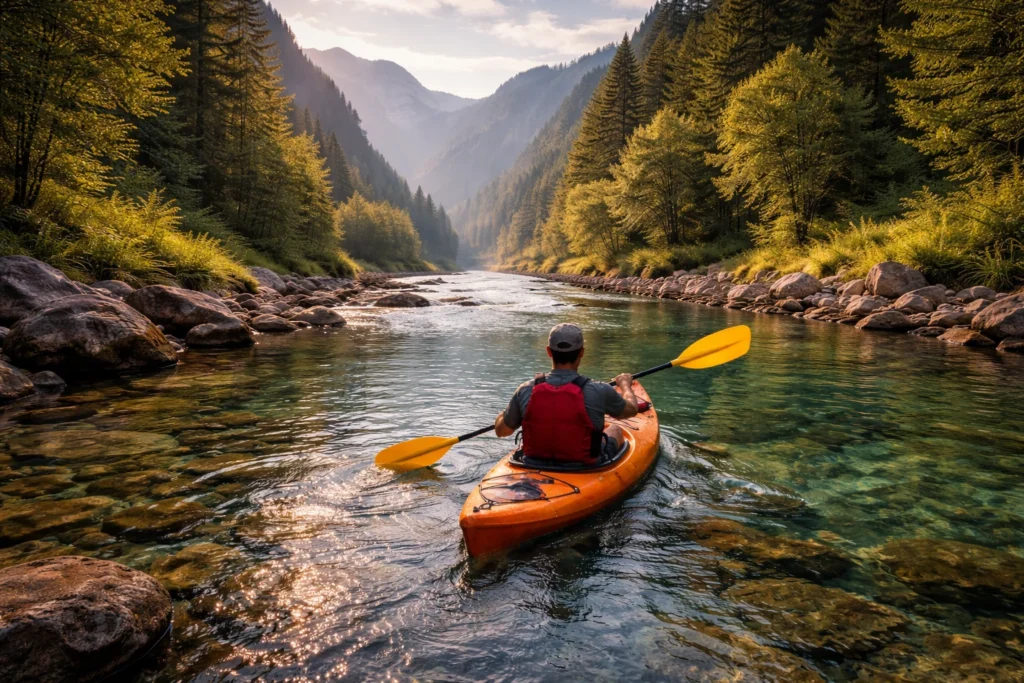
Rivers don’t complain about rocks. They respond to them.
They split. They curve. They accelerate. They smooth the stone over time.
You and I face rocks too. Deadlines. Illness. Rejection. Economic downturns. Family strain.
When we say life is like a river, we’re not pretending it’s easy. We’re acknowledging it’s dynamic.
The obstacle does two things:
- It tests your flexibility.
- It reveals your depth.
When pressure rises, surface strength isn’t enough. You need depth.
Here’s a simple framework for navigating obstacles:
The River Response Model
- Assess – What is actually happening?
- Adjust – What can I control?
- Advance – What small forward step is possible today?
Do not waste energy wishing the rock wasn’t there. Move around it.
Rapids and Storms: Surviving Intensity
Some stretches are calm. Others are chaos.
Deadlines stack up. A key client leaves. A relationship fractures. Health scares appear without warning. The water rises. The current speeds up.
Life is like a river, and some seasons are rapids.
In rapids, strategy changes. You don’t fight the entire current. You stabilize. You focus on immediate navigation.
When you’re in a turbulent season:
- Narrow your focus to what’s urgent.
- Reduce optional commitments.
- Protect sleep aggressively.
- Ask for help sooner, not later.
- Remind yourself this is a season, not a permanent state.
Rapids are loud. But they don’t last forever.
The river always widens again.
Still Waters: The Power of Reflection
We talk a lot about ambition. Rarely about stillness.
But rivers have calm stretches. Wide, slow, reflective surfaces where you can see clearly to the bottom.
We need those moments.
High performers often fear stillness. Silence feels unproductive. Reflection feels indulgent.
It isn’t.
Stillness is strategic.
Interestingly, prolonged isolation can lead to cognitive and emotional disruption a condition sometimes described in extreme environments as chronostasis, the illusion that time seems to stretch or distort.
Why does that matter? Because perception shifts when we pause. Time feels different. Reflection feels longer. Stillness feels uncomfortable at first. But with practice, it becomes clarity.
Here are three practical ways to build still water into your life:
- Weekly 30-minute review – What worked? What drained me? What needs adjustment?
- Quarterly reset day – No meetings. Just thinking and planning.
- Device-free walks – Let your thoughts surface without distraction.
Life is like a river, and reflection prevents burnout.
Without stillness, you confuse motion with progress.
Surface vs. Depth: What’s Really Moving Beneath
On the surface, rivers may look calm. Beneath, strong currents move silently.
Professionals are the same way.
Someone may look composed while carrying heavy internal strain. Another may appear relaxed while building quietly in the background.
When we say life is like a river, we’re acknowledging unseen layers.
Depth is built through:
- Hardship endured privately.
- Lessons learned from failure.
- Emotional awareness.
- Honest self-examination.
Surface skills get attention. Depth builds sustainability.
If you want to increase your depth:
- Journal honestly once a week.
- Seek feedback without defensiveness.
- Study your emotional triggers.
- Invest in therapy or coaching if needed.
Tributaries: The People Who Join Your Flow
Rivers grow when streams merge into them.
You grow when people merge into your life.
Mentors. Friends. Partners. Colleagues. Even rivals.
Every connection shifts direction slightly.
Some expand your reach. Some dilute your focus. Some strengthen your current.
Be intentional.
| Type of Influence | Questions to Ask |
| Energizing | Do I leave conversations feeling clearer? |
| Neutral | Is this connection aligned with my direction? |
| Draining | Do I consistently feel smaller or tense afterward? |
Life is like a river, but you choose many of the tributaries that feed it.
Choose wisely.
The Banks: Boundaries Create Direction
Without banks, a river floods.
Without boundaries, a life fragments. Boundaries are not barriers to connection. They are guides for flow.
Professional boundaries include:
- Clear working hours.
- Defined scope of responsibility.
- Transparent communication.
- Saying no without guilt.
Personal boundaries include:
- Protecting rest.
- Guarding emotional energy.
- Limiting exposure to negativity.
- Choosing aligned commitments.
If your life feels scattered, look at your banks. They may need reinforcement.
Structure does not restrict freedom. It channels it.
Erosion: Slow, Invisible Transformation
Rivers reshape mountains. Not overnight. Over time.
You are reshaping yourself daily through repeated habits.
Small actions, compounded, carve deep grooves.
If life is like a river, then your routines are your current.
Ask yourself:
- What am I consistently practicing?
- What identity am I reinforcing?
- What small behavior, repeated daily, would shift my trajectory?
Five minutes of daily reflection compounds.
So does five minutes of daily avoidance.
Choose your current.
The Delta and the Ocean: Meaning and Legacy
Eventually, rivers meet the sea.
They expand. They release. They become part of something larger.
We don’t often think about legacy in practical terms. But we should.
Legacy is not about fame. It’s about impact.
Who benefited because you showed up fully?
What did you build that outlasts you?
What did you model for others?
Life is like a river, and its final stretch is not about speed. It’s about contribution.
Consider:
- Are you mentoring someone?
- Are you building systems that endure?
- Are you leaving relationships better than you found them?
- Are you documenting knowledge that others can use?
Fulfillment is rarely found in accumulation. It’s found in contribution.
Flow With Intention
Look back at your life.
See the bends. The rocks. The calm stretches. The floods. The people who merged into your current. The habits that carved your character.
None of it was random.
Life is like a river not chaotic, but responsive. Not static, but evolving. Not linear, but purposeful in motion.
You don’t control every current. But you control how you navigate.
You can resist the flow and exhaust yourself. Or you can learn its patterns, adjust your posture, strengthen your depth, and move with intention.
You are not stuck.
You are flowing.
And the river is still moving forward.
FAQs
It means life is constantly moving, shaped by change, obstacles, and direction—just like a river flowing toward its destination.
Focus on steady progress, adapt to setbacks quickly, and treat detours as skill-building opportunities rather than failures.
Because challenges redirect and refine you, often strengthening resilience and clarity over time.
Rapids symbolize intense seasons stress, pressure, or uncertainty that require focus and controlled navigation.
Stillness provides clarity, prevents burnout, and allows you to evaluate direction before continuing forward.
Tributaries represent the people and influences that join your journey and shape your growth.
Boundaries guide your energy and direction, just like riverbanks prevent flooding and maintain flow.
Depth represents emotional maturity, self-awareness, and resilience built through experience.
Yes while you can’t control every current, you can adjust your response and redirect your path intentionally.
The ocean symbolizes purpose, contribution, and the lasting impact you leave behind.