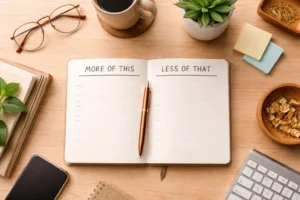
Most people think they’re independent thinkers. Most aren’t.
If you’ve ever wondered how to be free minded, you’re already ahead of the curve. Because the first step toward mental freedom is recognizing that your thinking might not be entirely your own.
We inherit opinions before we earn them. We adopt beliefs before we test them. And we defend ideas we’ve never examined. And we build identities around stories we didn’t consciously choose.
That’s not weakness. That’s conditioning.
But here’s the good news: mental freedom is learnable. Trainable. Strengthenable. You can absolutely learn how to be free minded without becoming reckless, detached, or rebellious for the sake of it.
Let’s break it down clearly. No fluff. No clichés. Just practical steps.
What Does It Actually Mean to Be Free Minded?
Being free minded doesn’t mean agreeing with everyone. It doesn’t mean rejecting structure. And it doesn’t mean floating through life without convictions.
It means this:
You choose your thoughts instead of being ruled by them.
A free minded person can:
- Hold strong opinions without becoming trapped by them
- Change their mind without feeling ashamed
- Listen without instantly reacting
- Disagree without feeling threatened
- Evolve without losing themselves
That’s power.
If you want to know how to be free minded, understand this first: freedom starts with awareness.
The Invisible Architecture of Your Thinking
Before you can free your mind, you have to see its walls.
Your beliefs are shaped by:
- Family narratives
- Cultural norms
- Education systems
- Media exposure
- Peer reinforcement
- Emotional experiences
Many of these influences are useful. Some are limiting. Most operate unconsciously.
Think of your mind as a house you’ve lived in your whole life. You know where the furniture is. You don’t question the layout.
Until you decide to renovate.
Learning how to be free minded requires renovation. Not demolition. You don’t need to destroy your identity. You need to inspect it.
Signs You’re Not as Free Minded as You Think

Let’s be honest. Growth requires confrontation.
Here are subtle signs you may still be mentally boxed in:
- You feel defensive when someone challenges your opinion.
- You avoid conversations with people who think differently.
- You rely heavily on one news source or perspective.
- You label yourself rigidly (career, personality, politics).
- You equate being wrong with being inferior.
- You react emotionally before reflecting.
Notice something important: none of these are moral failures. They’re habits.
And habits can change.
Step 1: Question Your Assumptions (Yes, Even the Comfortable Ones)
If you want to master how to be free minded, start here.
Ask yourself:
- Why do I believe this?
- Where did this belief originate?
- Have I ever seriously examined the opposite view?
- Is this belief based on evidence or emotion?
Most people never run this audit.
Try This: The Belief Inventory Exercise
Open a journal. Write down five strong opinions you hold. Then, for each one:
| Question | Your Answer |
| Where did this belief come from? | |
| What evidence supports it? | |
| What evidence challenges it? | |
| How would my life change if this were wrong? |
This exercise is uncomfortable. Good.
Discomfort is often the first signal that you’re learning how to be free minded.
Step 2: Detach From Labels
Labels simplify the world. But they can shrink you.
“I’m just not a creative person.”
“I’m bad with money.”
“I’m this type of person.”
“I’m not the kind who…”
Pause.
Labels can become cages disguised as clarity.
Being free minded means holding identity lightly. You are not your job. Not your mistakes. Not your personality test result. And not your past.
Growth requires flexibility.
Instead of saying:
- “I am bad at public speaking.”
Try:
- “Public speaking is a skill I haven’t practiced enough.”
That subtle shift changes everything.
When people ask me how to be free minded, I often say: stop narrating your life in permanent ink. Use pencil.
Step 3: Strengthen Emotional Regulation
You cannot be mentally free if your emotions control you.
Harsh? Maybe. True? Absolutely.
A triggered mind is not a free mind.
Emotional regulation doesn’t mean suppression. It means space.
The Pause Technique
Next time you feel triggered:
- Stop speaking.
- Take one slow breath.
- Ask yourself: What am I reacting to?
- Ask: What outcome do I want here?
That pause is power.
The more space between stimulus and response, the more mentally free you become. This is a core pillar of how to be free minded.
You don’t eliminate emotion. You learn to ride it without drowning.
Step 4: Expose Yourself to Different Perspectives
A mind that never leaves its echo chamber cannot expand.
You don’t have to agree with opposing views. But you must understand them.
Read books from authors you typically avoid.
Follow thinkers outside your ideological bubble.
Have respectful conversations with people who disagree.
Here’s the key: listen to understand, not to win.
Intellectual humility is strength. Not weakness.
When you consistently seek diverse perspectives, you stretch your thinking. And stretched thinking is essential if you truly want to understand how to be free minded.
Step 5: Build Independent Thinking Skills
Freedom isn’t passive. It requires discipline.
If you want to sharpen your thinking:
Practice These Habits
- Verify sources before sharing information.
- Separate facts from opinions.
- Look for primary data, not summaries.
- Ask: Who benefits from this narrative?
- Delay forming conclusions until you have sufficient context.
Here’s a quick comparison:
| Reactive Thinking | Independent Thinking |
| Instant judgment | Thoughtful evaluation |
| Emotional sharing | Evidence-based review |
| Group alignment | Personal analysis |
| Black-and-white | Nuanced consideration |
Independent thinking doesn’t mean contrarian thinking. It means thoughtful thinking.
That’s how to be free minded without becoming chaotic.
Step 6: Let Go of the Need for Control
This one surprises people.
Mental rigidity often stems from control.
We cling to certainty because uncertainty feels unsafe. We hold tightly to opinions because changing them feels destabilizing.
But control is often an illusion.
Being free minded means accepting:
- You won’t have all answers.
- Some situations are unpredictable.
- Growth includes ambiguity.
The paradox? The more comfortable you become with uncertainty, the calmer you feel.
Freedom increases. Anxiety decreases.
The Balance: Free Minded and Grounded
Let’s clear up a misconception.
Being free minded doesn’t mean you lack standards. It doesn’t mean you abandon boundaries. It doesn’t mean you become endlessly flexible.
You can be open and firm.
A free minded professional can say:
- “I’m open to new data.”
- “I’m willing to reconsider.”
- “But here’s where I stand for now.”
That phrase matters. For now.
Learning how to be free minded includes knowing when to hold a belief and when to revisit it.
Discernment is not rigidity. It’s intelligent stability.
Daily Habits That Cultivate a Free Mind

You don’t wake up one day mentally liberated. You practice it.
Here are simple, practical habits:
1. Weekly Thought Audit
Set aside 30 minutes. Ask:
- What assumptions did I make this week?
- Where did I react instead of reflect?
- What new information challenged me?
2. Intentional Conversations
Once a week, engage someone outside your usual circle. Ask open questions. Listen.
3. Controlled Discomfort
Read something that challenges you. Watch a debate calmly. Attend a new environment.
4. Reduce Digital Noise
Limit algorithm-driven feeds. Curate information intentionally.
5. Practice “I Might Be Wrong”
Use this phrase occasionally. Not sarcastically. Genuinely.
These micro-practices compound. Slowly. Powerfully.
Common Misconceptions About Being Free Minded
Let’s dismantle a few myths.
Myth 1: It means agreeing with everyone.
No. You can disagree strongly and still be mentally free.
Myth 2: It means having no convictions.
Wrong. It means holding convictions thoughtfully.
Myth 3: It means rejecting structure.
Not at all. Structure supports clarity. Rigidity suffocates it.
Myth 4: It means you never get emotional.
False. It means you understand your emotions.
If you’re serious about how to be free minded, reject these distortions early.
The Long-Term Benefits of Being Free Minded
Why put in this effort?
Because the payoff is enormous.
1. Better Relationships
You listen better. You argue smarter. And you connect deeper.
2. Reduced Anxiety
Rigid thinking creates fear. Flexible thinking creates resilience.
3. Stronger Leadership
Leaders who are free minded adapt faster. They innovate. They don’t collapse under new information.
4. Increased Creativity
Creativity thrives where judgment loosens.
5. Adaptability in Change
The world shifts constantly. A rigid mind breaks. A flexible one bends.
In a rapidly changing world, knowing how to be free minded is not philosophical fluff. It’s strategic advantage.
Challenges You’ll Face
Let’s not romanticize it.
You will face resistance.
- People may question your changes.
- Some may misinterpret openness as weakness.
- You may feel temporary identity confusion.
- Old beliefs may resurface under stress.
Growth feels destabilizing at first.
But instability during growth is not collapse. It’s recalibration.
Stay steady. Stay reflective. And stay curious.
Freedom Begins Internally
You don’t become free minded because society grants permission. You become free minded because you take responsibility for your thinking.
That’s the shift.
Stop outsourcing your beliefs.
Stop reacting automatically.
And stop fearing intellectual evolution.
Start examining.
Start questioning.
And start choosing.
If you’re still wondering how to be free minded, here’s the simplest summary:
- Think before reacting.
- Question before defending.
- Listen before concluding.
- Evolve without ego.
Mental freedom isn’t a destination. It’s a practice.
And the beautiful part?
Every single day gives you another opportunity to practice it.
So start today. Even with one thought. One assumption. One reaction.
That’s how to be free minded.
FAQs
Being free minded means choosing your thoughts consciously instead of reacting automatically to beliefs, emotions, or outside pressure.
Not exactly. Open-mindedness is about considering new ideas, while being free minded includes emotional control and independent thinking.
Yes. You can hold firm views while staying willing to reassess them when new evidence appears.
No. It means you can disagree respectfully without feeling threatened or defensive.
It’s an ongoing process. Small daily habits build mental freedom over time.
Most people are conditioned by upbringing, culture, and media, and they rarely question those influences.
Yes. When emotions control your responses, your thinking becomes reactive rather than intentional.
Often it does, because flexible thinking helps you handle uncertainty more calmly.
No. It’s a sign of intellectual maturity and self-awareness.
Start by questioning one strong belief and examining where it came from.