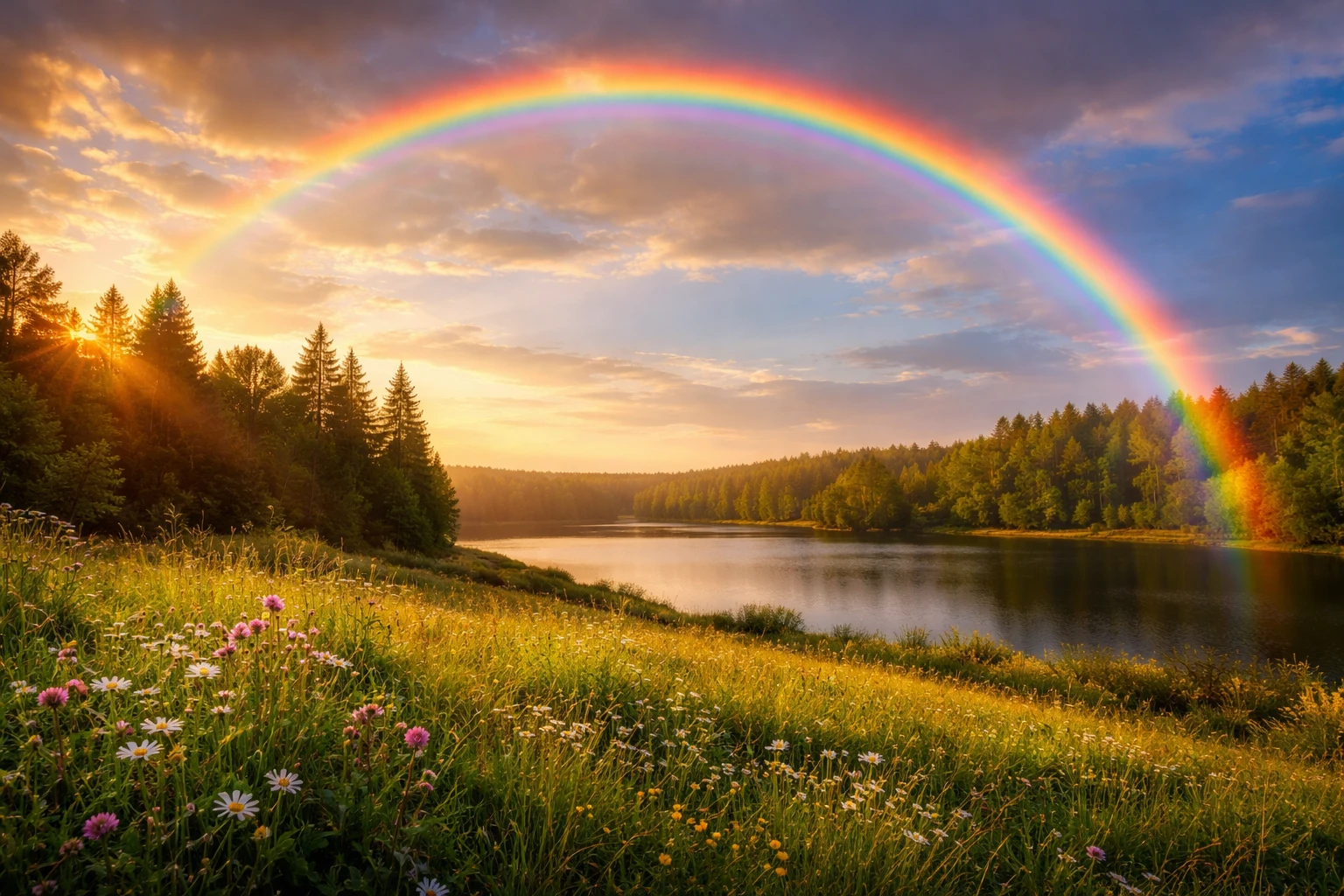
The rainbow metaphor has a strange kind of staying power.
It’s ancient. It’s visual. And it somehow still feels relevant, even after centuries of use.
We reach for the rainbow metaphor when plain language runs out. When facts feel cold. When experience needs color. Across cultures, professions, and personal stories, the rainbow metaphor keeps appearing as a way to talk about hope, complexity, transition, and meaning—without spelling everything out.
I’ve noticed something interesting over time. The rainbow metaphor isn’t used when life is easy. It shows up after storms. After confusion. After loss. That alone tells us why it matters.
Let’s unpack why the rainbow metaphor works, where it comes from, and how to use it with intention instead of defaulting to something vague or overdone.
What a Metaphor Really Does—and Why Rainbows Fit So Well
A metaphor doesn’t decorate language.
It compresses experience.
Good metaphors allow us to say more with fewer words. The rainbow metaphor succeeds because it links three powerful ideas in one image:
- Contrast (light and rain)
- Sequence (colors in order)
- Impermanence (it appears, then fades)
Unlike abstract metaphors, a rainbow is something most people have seen. That shared visual memory gives the rainbow metaphor immediate emotional access. You don’t need to explain it. People feel it.
That’s rare.
The Long History Behind the Rainbow Metaphor
Long before rainbows were explained scientifically, they were explained symbolically. Humans don’t like unanswered beauty. We assign meaning to it.
Across early civilizations, the rainbow metaphor often represented connection:
- A bridge between earth and sky
- A message after chaos
- A signal of balance returning
What’s consistent isn’t the story itself. It’s the timing. Rainbows appear after storms. Always after.
That sequencing is the backbone of the rainbow metaphor. Without the storm, the rainbow means nothing.
Why Writers Keep Coming Back to the Rainbow Metaphor
In literature, the rainbow metaphor is rarely about happiness alone. It’s about transition.
Writers use it to signal:
- A shift in emotional tone
- The end of a difficult chapter
- A fragile moment of clarity
What makes the rainbow metaphor effective in writing is restraint. It works best when it’s brief and earned, not explained to death.
Common literary uses of the rainbow metaphor
| Context | What the rainbow represents |
| End of conflict | Temporary peace |
| Character growth | Changed perspective |
| Loss or grief | Meaning without erasure |
| Journey narratives | Arrival, not completion |
The rainbow metaphor doesn’t say “everything is fine now.”
It says, “something has changed.”
That distinction matters.
Poetry and the Rainbow Metaphor: Less Explanation, More Feeling
Poetry understands something prose often forgets. Meaning doesn’t need instructions.
Poets lean on the rainbow metaphor because it does emotional work without being explicit. The colors, the light, the brevity—it all mirrors human experience.
A rainbow doesn’t last.
Neither do moments of clarity.
That’s why the rainbow metaphor often appears in poems about fleeting joy, temporary peace, or the fragile nature of hope. It’s not optimistic in a shallow way. It’s honest.
Emotional Weight: What the Rainbow Metaphor Really Signals
Let’s be direct.
The rainbow metaphor is rarely about joy alone.
It’s about earned relief.
Emotionally, the rainbow metaphor tends to communicate:
- Recovery, not perfection
- Meaning after difficulty
- Emotional breathing room
This is why the rainbow metaphor resonates so strongly in personal writing, therapy, and reflection. It doesn’t deny pain. It reframes it.
Emotional meanings commonly tied to the rainbow metaphor
- Hope that doesn’t erase struggle
- Beauty that exists alongside mess
- Perspective gained, not gifted
When people say “this is my rainbow,” they usually mean, this came at a cost.
The Rainbow Metaphor as a Symbol of Diversity
In modern usage, the rainbow metaphor has expanded beyond personal experience into social meaning. The spectrum of colors naturally lends itself to conversations about difference and unity.
Here’s why the rainbow metaphor works so well in this context:
- Each color is distinct
- No color dominates
- The full image requires all of them
This makes the rainbow metaphor particularly powerful in discussions around identity, collaboration, and inclusion. It suggests harmony without sameness.
That’s a subtle but important point.
Psychology, Growth, and the Rainbow Metaphor
In psychology and personal development, the rainbow metaphor often represents integration.
Not “fixing” yourself.
Not “overcoming” everything.
But learning how conflicting parts coexist.
Growth rarely feels clean while it’s happening. The rainbow metaphor acknowledges that growth is often only visible in hindsight, once the storm has passed.
How the rainbow metaphor shows up in personal growth work
- Reflecting on hardship as meaningful
- Recognizing progress without erasing pain
- Allowing complexity instead of forcing closure
Used well, the rainbow metaphor doesn’t pressure people to feel better. It gives them permission to notice change when it appears.
The Science Behind Rainbows—and Why It Strengthens the Metaphor
Understanding how rainbows form doesn’t weaken the rainbow metaphor. It deepens it.
Rainbows require very specific conditions:
- Light at the right angle
- Moisture in the air
- A particular position of the observer
That precision mirrors life more than we’d like to admit. Not every storm produces a rainbow. Not every struggle produces insight.
And that’s okay.
The rainbow metaphor works because it doesn’t promise outcomes. It highlights possibility.
Everyday Language and the Rainbow Metaphor

We use the rainbow metaphor casually, often without thinking:
- “There’s a rainbow after this.”
- “That was the rainbow moment.”
- “You have to go through the storm first.”
These phrases persist because they’re emotionally efficient. They communicate reassurance without pretending to control outcomes.
Context, however, is everything. Used too early, the rainbow metaphor can feel dismissive. Used thoughtfully, it feels supportive.
When the Rainbow Metaphor Falls Flat
Let’s be honest. The rainbow metaphor can be overused.
It fails when:
- It minimizes real pain
- It’s offered as a solution instead of a reflection
- It skips over the storm entirely
People don’t want metaphors when they want help. Timing matters.
Signs the rainbow metaphor isn’t appropriate
- Someone is still in the middle of crisis
- The metaphor replaces action
- It’s used to rush emotional closure
The rainbow metaphor isn’t a shortcut. It’s a lens.
How to Use the Rainbow Metaphor Effectively in Your Writing
If you’re going to use the rainbow metaphor, earn it.
Here’s how to make it work instead of sounding generic:
Practical writing guidelines
- Anchor it in a specific moment or experience
- Let the reader feel the storm first
- Keep it brief and avoid over-explaining
- Pair it with reflection, not resolution
Good vs weak usage
| Weak | Strong |
| “Everything was bad, then the rainbow appeared.” | “I noticed the rainbow only after I stopped bracing for impact.” |
The rainbow metaphor is most powerful when it feels discovered, not inserted.
Why the Rainbow Metaphor Hasn’t Gone Away
Trends change. Language evolves.
But the rainbow metaphor sticks.
Why? Because it captures a truth that doesn’t age: clarity often arrives quietly, after chaos, and never stays long enough.
The rainbow metaphor doesn’t promise permanence. It offers perspective.
That’s why professionals still use it. Why writers still trust it. Why people still recognize themselves in it.
Final Thoughts: The Quiet Strength of the Rainbow Metaphor
The rainbow metaphor survives because it respects complexity. It doesn’t deny storms. It doesn’t rush healing. And it doesn’t demand optimism.
It simply says this: something beautiful can exist without erasing what came before.
That’s not sentimental.
That’s honest.
And honesty, especially in language, is what gives a metaphor real power.
FAQs
The rainbow metaphor typically represents hope, transition, or meaning that appears after a difficult experience rather than instant happiness.
Because rainbows are visually universal and emotionally familiar, the rainbow metaphor feels intuitive and easily understood across different societies.
No, the rainbow metaphor often acknowledges struggle first and focuses more on change or perspective than pure optimism.
Writers use the rainbow metaphor to signal emotional shifts, resolution after conflict, or moments of clarity following uncertainty.
Yes, when it’s used without context or too early, the rainbow metaphor can feel shallow or dismissive.
It reflects growth that emerges from hardship, emphasizing insight and resilience rather than quick fixes.
It connects contrast, beauty, and impermanence in a single image, mirroring real human experiences.
It can be, as long as it’s grounded in real examples and used sparingly to reinforce a point rather than replace analysis.
Understanding how rainbows form adds depth by highlighting that meaningful moments require specific conditions, not guarantees.
Writers should avoid it when addressing active crises or when action and clarity are more appropriate than symbolism.