“I don’t like labels.”
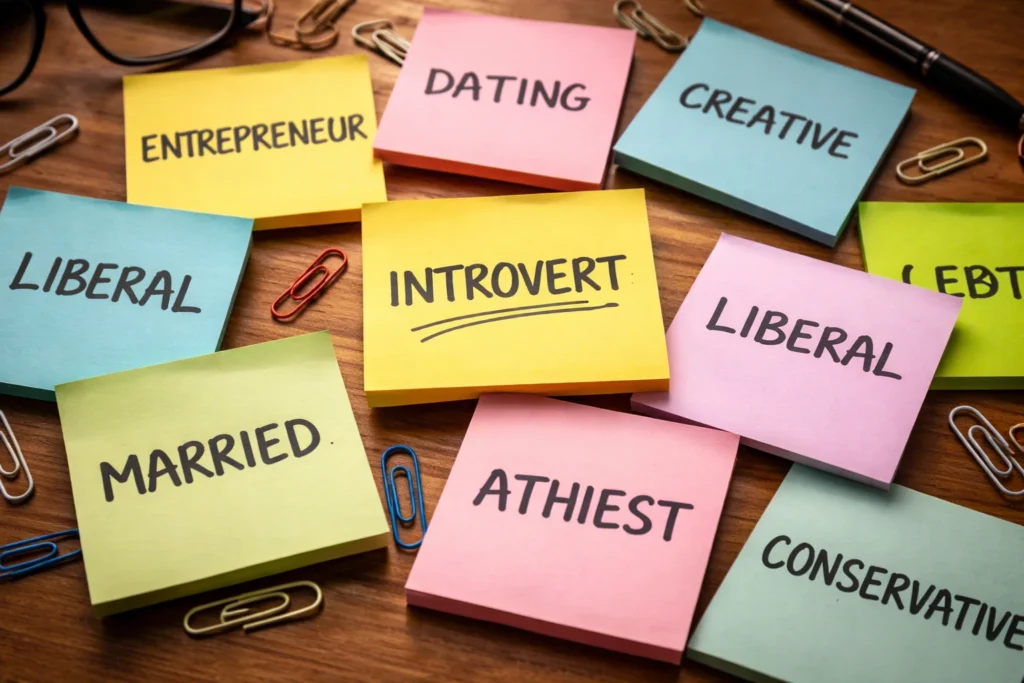
You’ve heard it. Maybe you’ve said it yourself. The I don’t like labels meaning isn’t as simple as it sounds. It’s not just about rejecting a word. It’s about resisting being reduced. It’s about control. It’s about identity in a world that constantly tries to summarize you in one line. We live in a culture obsessed with categorizing. Introvert. Extrovert. Liberal. Conservative. Single. Taken. CEO. Freelancer. Anxious. Confident.
Neat boxes. Clean titles. Easy explanations. But human beings are not neat. So when someone says, “I don’t like labels,” what are they really communicating? Freedom? Fear? Growth? Avoidance? All of the above? Let’s unpack the deeper layers of the I don’t like labels meaning and why this phrase has become one of the defining statements of modern identity.
The Literal Meaning: What Are Labels, Really?
At its most basic level, a label is a shorthand description. A word that summarizes something complex.
We use labels constantly:
- Relationship labels: dating, exclusive, married
- Career labels: executive, creative, entrepreneur
- Personality labels: introvert, overthinker, leader
- Social labels: conservative, progressive, religious, atheist
Labels make communication efficient. They give context quickly. But here’s the problem. Efficiency can erase nuance. When someone says “I don’t like labels,” the surface-level meaning is clear: they don’t want to be categorized. But beneath that statement is often a deeper resistance a refusal to let a single word define the whole story. That’s the first layer of the I don’t like labels meaning:
I am more than your summary.
The Psychology Behind Labels
Labels don’t just describe us. They shape us.
Psychology has long shown that when people are repeatedly described in certain ways, they begin to internalize those descriptions. A child labeled “shy” may grow up avoiding social risks. An employee labeled “difficult” may start believing collaboration isn’t their strength.
Words stick. They become filters through which we see ourselves. In academic discussions, this overlaps with ideas like essentialism the belief that certain traits define the core of who someone is. Here’s how labels influence identity:
| Effect | What Happens |
| Self-fulfilling prophecy | We act in ways that confirm the label |
| Cognitive narrowing | We stop exploring outside the identity |
| Social reinforcement | Others treat us based on the label |
| Performance pressure | We feel we must live up to the title |
This is why the I don’t like labels meaning often carries psychological weight. It’s not just discomfort with a word. It’s awareness that labels can quietly limit growth. When someone says, “I don’t like labels,” they may be protecting their future self the version of them that hasn’t been explored yet.
When “I Don’t Like Labels” Is About Freedom
Sometimes the statement is deeply healthy. Some people genuinely resist labels because they value evolution. They don’t want to be frozen in time. Think about how often society assigns symbolism to images a CEO in a suit, a startup founder in sneakers, or even a man driving pickup truck being automatically associated with rugged independence. These visual shortcuts are labels too. They compress a complex human story into a single impression.
That’s the freedom side of the I don’t like labels meaning.
It says:
- I am allowed to change.
- I am allowed to contradict myself.
- I am allowed to grow beyond who I was last year.
This mindset reflects adaptability. And adaptability is survival. Interestingly, research from U.S. government agencies like the National Institute of Mental Health (NIMH) often emphasizes how rigid self-perceptions can impact mental health and resilience. While not specifically about labels, their broader discussions on identity and mental health are worth exploring. In this context, rejecting labels isn’t rebellion. It’s strategy.
When It’s About Protection

But let’s be honest. Not every use of the phrase is about growth. Sometimes, “I don’t like labels” is armor. People who have been misunderstood, stereotyped, or judged often become cautious about classification. If you’ve been reduced to a stereotype before, you may hesitate to accept any defining term again. It can also signal fear of being boxed into expectations.
Consider these scenarios:
- Someone avoids calling themselves a leader because they fear scrutiny.
- A professional resists identifying with a political group to avoid conflict.
- A person avoids defining a relationship to escape pressure.
The I don’t like labels meaning can reflect both autonomy and avoidance. The difference lies in intention.
Dating and Relationships: The Loaded Context
When someone says “I don’t like labels” in a romantic context, it often triggers confusion. Is this about independence? Or commitment?
Let’s break it down clearly.
Healthy Reasons
- They want clarity before defining the relationship.
- They believe connection matters more than titles.
- They value organic progression over rushed definitions.
Concerning Reasons
- They want the benefits without responsibility.
- They avoid commitment language.
- They prefer ambiguity because it keeps options open.
Ask yourself:
- Does the behavior align with partnership?
- Is there emotional consistency?
- Is the resistance temporary or indefinite?
The I don’t like labels meaning in dating becomes meaningful only when paired with action. Words without behavior are noise. If someone rejects labels but behaves with commitment, respect, and clarity, that’s autonomy. If someone rejects labels and avoids accountability, that’s avoidance.
Labels Can Empower, Too
We need balance. Not all labels are restrictive. Many are empowering. For some, identifying as an entrepreneur provides confidence. Identifying as a survivor builds strength. Identifying as part of a community fosters belonging.
Labels can:
- Create shared language
- Offer social connection
- Provide validation
- Reduce isolation
This is why the I don’t like labels meaning isn’t universally positive. Rejecting labels entirely can sometimes disconnect you from communities that might support you.
The key question is this:
Who chose the label? Self-chosen labels often feel empowering. Imposed labels feel limiting.
The Double-Edged Sword of Labels

| Labels Help When… | Labels Harm When… |
| They clarify communication | They oversimplify identity |
| They create belonging | They enforce stereotypes |
| They provide structure | They limit exploration |
| They reflect self-choice | They are imposed by others |
Understanding this duality gives depth to the I don’t like labels meaning. It’s not anti-definition. It’s anti-reduction.
The Deeper Meaning: Control Over Your Narrative
At its core, the I don’t like labels meaning is about narrative ownership. Who gets to define you? Is it your past? Your employer? Your relationship status? Your industry? Your background? Or is it you? Identity isn’t static. It evolves. The most grounded professionals don’t reject labels blindly. They choose them carefully. They adopt titles strategically. They release them when they no longer fit. It’s not about refusing structure. It’s about refusing confinement.
Final Reflection
The next time you hear someone say, “I don’t like labels,” listen closely. The statement carries more depth than it appears.
It might mean they value freedom.
It might mean they’ve been misunderstood.
It might mean they’re protecting themselves.
It might mean they’re still discovering who they are.
The I don’t like labels meaning isn’t about rejecting language. It’s about protecting complexity.
You are not a category.
You are not a summary.
You are not a static definition.
You are evolving. And that deserves space. Labels can describe you. But they should never confine you. That’s the real meaning.
FAQs
It usually means a person doesn’t want to be reduced to a single category or definition.
Not always; it depends on whether the person communicates clearly and behaves consistently.
They may value flexibility, fear judgment, or want control over how they define themselves.
Yes, labels can create clarity, community, and shared understanding when they are self-chosen.
It can signal a desire for organic growth or avoidance of commitment depending on actions.
It can be, especially if it reflects self-awareness and intentional identity rather than avoidance.
Ask clarifying questions and focus on expectations instead of titles.
Yes, rigid labels can limit growth and reinforce self-fulfilling beliefs.
Not realistically, but you can choose which labels empower you and release the rest.
It’s about maintaining autonomy, complexity, and control over your personal narrative.