
When people first hear the phrase “what is 50 shades of green”, they usually smirk. It sounds playful. Maybe even provocative. But step past the wordplay and you’ll discover something far more interesting: a layered concept about color, sustainability, psychology, business, and growth.
“50 Shades of Green” isn’t about a single idea. It’s about spectrum. Nuance. Degrees of commitment. Levels of maturity. And once you understand that, you start seeing green everywhere in branding, in environmental claims, in city design, in your own lifestyle choices. The real question isn’t just what is 50 shades of green. It’s: where do you fall on the spectrum?
Let’s break it down.
The Literal Meaning: The Color Itself
Start with the basics. Green is created by combining blue and yellow. Simple. But the moment you adjust light, saturation, or tone, the simplicity disappears. Emerald. Olive. Mint. Forest. Sage. Chartreuse. Lime. Seafoam. Moss.
It multiplies quickly.
In color theory, green is not one shade but thousands. Every tiny adjustment in hue or brightness changes how it feels. A deep forest green communicates stability and tradition. A neon lime green screams energy and disruption.
In digital design, green exists within RGB values. In print, it lives in CMYK. In nature, it shifts with sunlight, soil, and season. That’s the first answer to what is 50 shades of green: it’s the reality that green is never just green.
If you want a deeper technical explanation of how humans interpret light and color variation, the concept of chromaticity offers a helpful foundation. It explains how color perception shifts depending on wavelength and intensity which is precisely why green can look dramatically different across environments.
And this matters more than you think.
The Environmental Meaning: A Spectrum of Sustainability
When people ask what is 50 shades of green in a sustainability context, they’re usually referring to levels of environmental commitment. Not everything labeled “green” is equally green.
Some companies make one small eco-adjustment and highlight it aggressively. Others redesign entire supply chains.
There’s a difference.
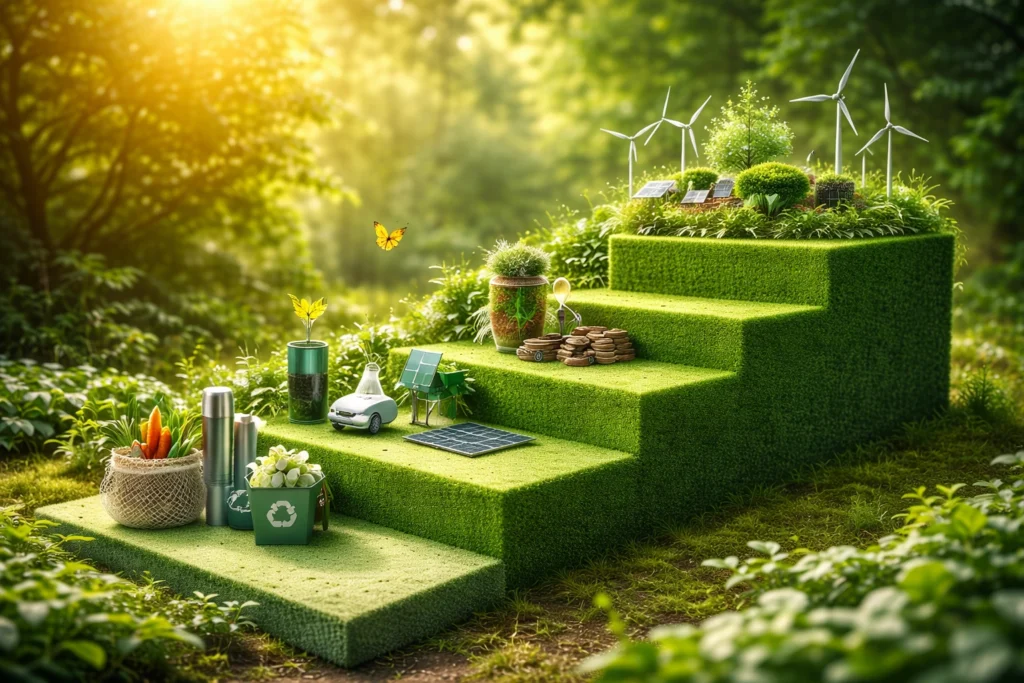
The Sustainability Spectrum
| Shade of Green | Level of Commitment | Example Behavior |
| Light Green | Basic awareness | Recycling, reusable bags |
| Moderate Green | Structured action | Energy-efficient appliances, EV adoption |
| Deep Green | Systemic change | Net-zero operations, supply chain audits |
| Transformational Green | Industry leadership | Regenerative practices, circular economy models |
Not all green is equal.
If you want formal guidance on how environmental marketing claims should be evaluated, the U.S. Federal Trade Commission’s Green Guides outline standards to prevent deceptive sustainability messaging. Surface-level green is one shade. Structural transformation is another.Understanding what is 50 shades of green in this context helps you spot the difference.
Cultural and Symbolic Meaning
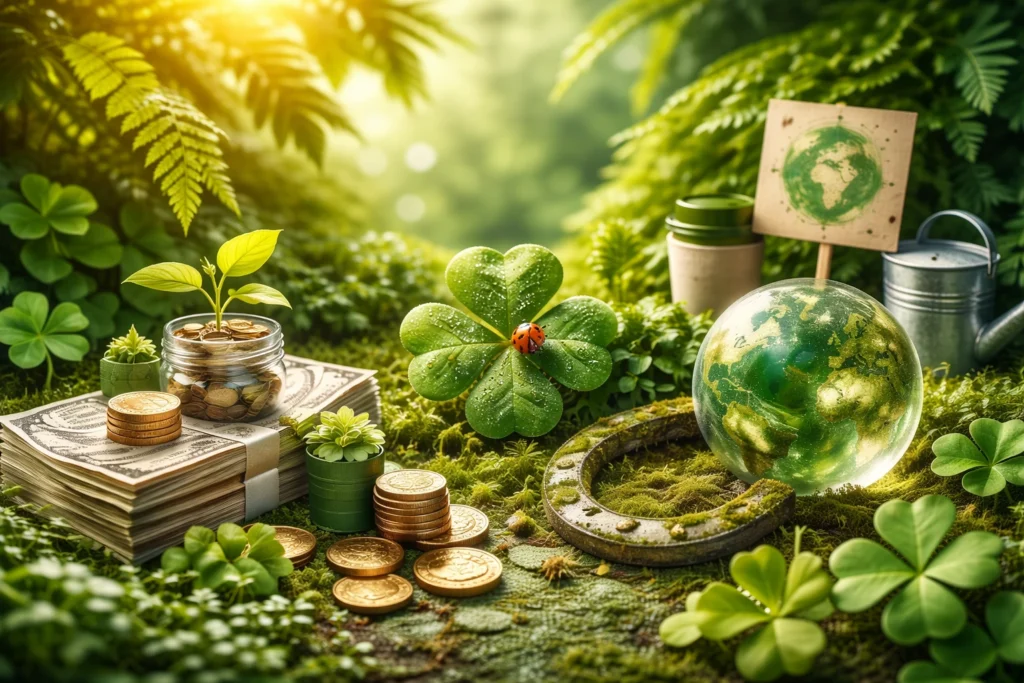
Green represents growth, renewal, fertility, wealth, luck, and even envy. It shifts meaning depending on context.
In finance, green signals prosperity.
In emotion, it can signal jealousy.
In environmental activism, it signals responsibility.
Green carries narrative weight.
That multiplicity of meaning is another answer to what is 50 shades of green. It reflects symbolic depth. The same color can represent money in one moment and moral responsibility in the next.
Context changes everything.
The Psychological Impact of Green
Exposure to green environments reduces stress. That’s not poetic language. It’s physiological. Parks lower cortisol levels. Offices with plants improve productivity. Natural views accelerate cognitive recovery after mental fatigue.
Green supports mental clarity.
In architecture and urban design, biophilic principles integrate natural elements into built spaces. That means:
- Indoor plants
- Natural light
- Organic materials
- Outdoor access
- Visual connection to nature
Different greens influence emotional tone differently. Pale greens calm. Deep greens ground. Bright greens energize. Color is not decoration. It’s neurological input.
The Metaphorical Meaning: Layers of Growth
Here’s where the phrase becomes powerful.
“50 Shades of Green” can symbolize stages of personal development. Growth is rarely linear. It unfolds in phases.
Awareness.
Experimentation.
Commitment.
Integration.
Leadership.
Each stage is a shade.
When I reflect on what is 50 shades of green in personal growth, I see it as degrees of alignment between values and action. You may care about sustainability but still overconsume. You may value health but ignore sleep.
We evolve gradually.
At some point, personal responsibility shifts inward. You stop waiting for external validation and start acting from internal clarity. In that sense, the phrase connects subtly to the idea behind “be your own light meaning” choosing internal guidance instead of relying solely on external signals. That’s a deeper shade of green. Not performative. Integrated.
The goal isn’t perfection. It’s progression.
The Business Interpretation: Green as Strategy
In the corporate world, green has become measurable.
Environmental, Social, and Governance (ESG) metrics now influence investor decisions. Sustainability reporting impacts valuation. Consumers reward transparency.
Why businesses move toward greener operations:
- Consumer trust
- Regulatory pressure
- Operational efficiency
- Risk mitigation
- Talent attraction
Companies operate across a spectrum. Some make surface-level changes. Others redesign infrastructure. Understanding what is 50 shades of green allows leaders to ask a critical question: Are we signaling sustainability or embedding it? That distinction determines long-term resilience.
How to Identify Your Own Shade of Green
This is where it becomes practical.
If someone asked you directly, “What is 50 shades of green in your life?” how would you respond?
Personal Reflection
- How much waste do you generate weekly?
- Do you prioritize durability over convenience?
- How often do you repair instead of replace?
- Are your purchasing choices aligned with your values?
Start small:
- Switch to energy-efficient lighting.
- Reduce disposable plastics.
- Audit unnecessary consumption.
- Support transparent brands.
Small changes compound.
Business Application
If you run a company:
- Map energy usage.
- Audit waste streams.
- Review supplier transparency.
- Set measurable sustainability targets.
Substance first. Messaging second. Shallow green fades. Deep green builds equity.
Why Spectrum Thinking Matters
Binary thinking oversimplifies growth.
You’re not either responsible or irresponsible. You’re somewhere on a continuum. That’s the essence behind what is 50 shades of green. It rejects extremes and embraces nuance. It recognizes that progress unfolds in layers.
And layers allow improvement.
Final Reflection
So, what is 50 shades of green?
It’s color variation.
It’s environmental commitment.
It’s symbolic depth.
It’s psychological influence.
It’s business strategy.
It’s personal growth.
It’s the understanding that green exists in degrees and so do we. The future isn’t simply green. It’s 50 shades of green and evolving.
FAQs
It refers to the many variations of the color green and the broader spectrum of sustainability, growth, and commitment levels.
No, it also represents different degrees of environmental responsibility, business strategy, and personal development.
Green changes based on light, saturation, and tone, creating countless visual and emotional differences.
It highlights that not all eco-friendly efforts are equal there are varying levels of environmental commitment.
Look for transparent reporting, measurable goals, and verified certifications rather than vague marketing claims.
Green symbolizes renewal and life in nature, which connects it to progress and development.
Yes, exposure to green environments can reduce stress and improve focus and mental clarity.
Start with small changes like reducing waste, conserving energy, and aligning purchases with your values.
Green signals trust, health, sustainability, and financial stability depending on the shade used.
Because sustainability and growth are gradual processes, not all-or-nothing decisions.